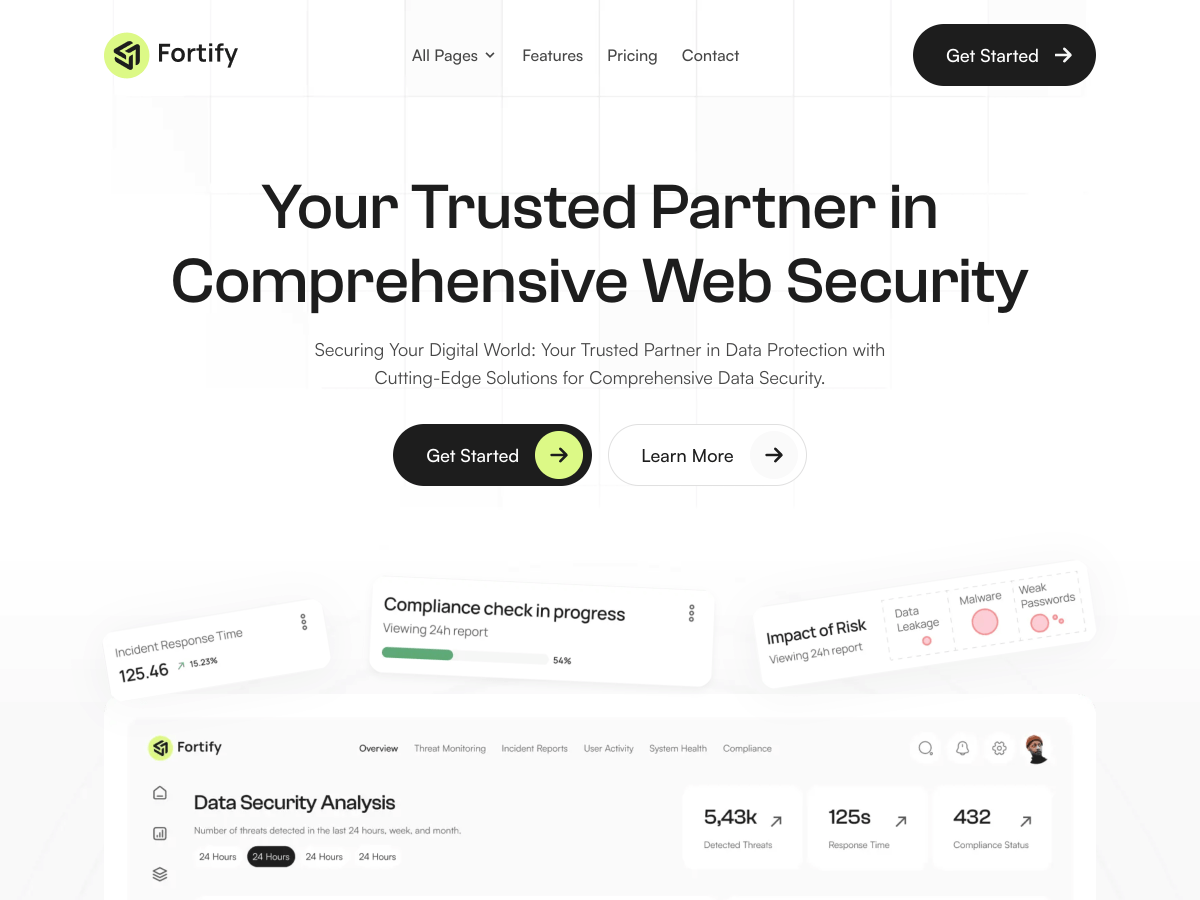
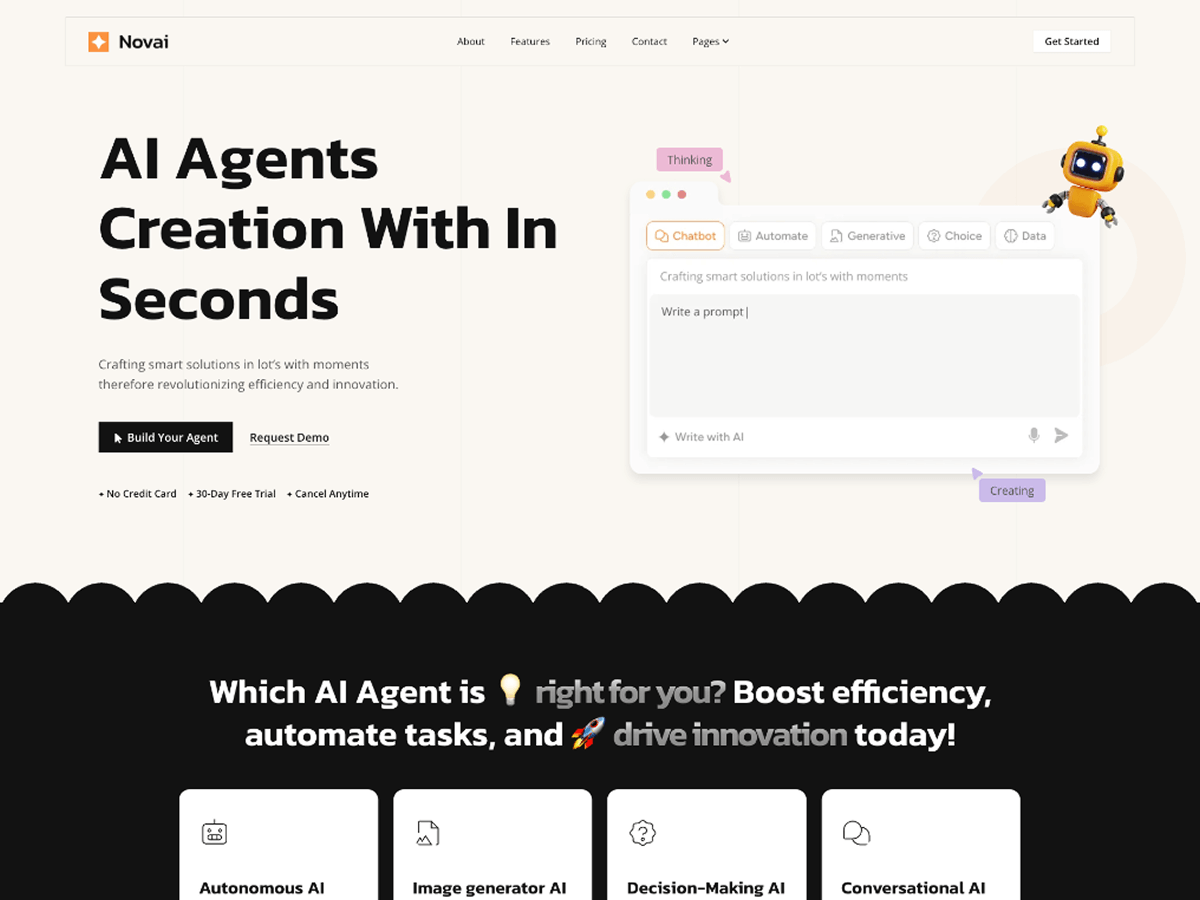

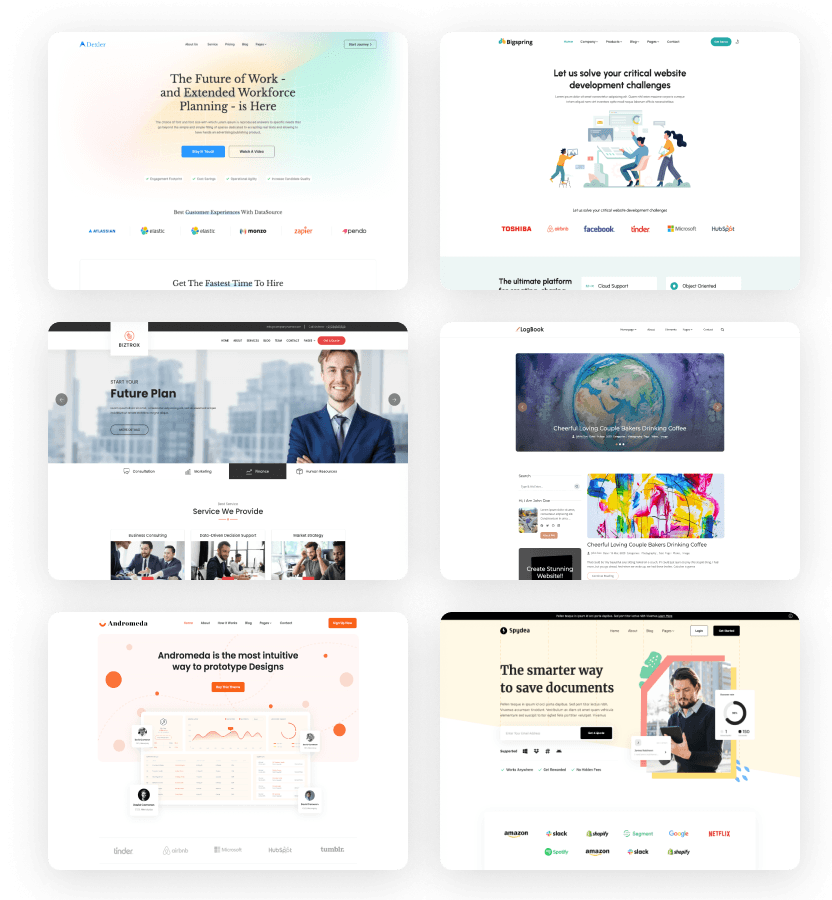

Astro has become a solid choice for building fast, content-focused websites. Its island architecture keeps JavaScript minimal by default, which is why Astro blogs consistently score well on Core Web Vitals.
This post rounds up the best Astro blog templates available right now. We looked at free and premium options across a range of use cases: personal blogs, multi-author publications, portfolio-blogs, and minimalist writing spaces.
How we selected these templates:
- Active maintenance (updated within the last 12 months or built on Astro 3+/4+)
- PageSpeed score of 90+ on desktop, or verified fast performance
- Clear documentation or setup instructions
- A meaningful feature set beyond just "it looks good"
- Honest consideration of who each template actually suits
We build and sell Astro templates at Themefisher, so one of our own products is included in this list. We've noted that clearly. We've applied the same criteria to everything here regardless of origin.
Astro Blog Templates
Bookworm Light Astro

Best for: Multi-author blogs covering lifestyle, food, travel, health, or any content-heavy niche.
Bookworm Light is a free, open-source Astro blog template designed for content-rich sites. It supports multiple authors, tags, and categories out of the box, which makes it practical for team blogs or high-volume personal publishing.
What we like: The 95+ PageSpeed score holds up across page types, not just the homepage. The FuseJS-powered search is lightweight and works without a backend. Setup is straightforward, and the folder structure is clean enough that you can start customizing without reading a wall of docs.
Worth knowing: This is a free Themefisher template, so we have a direct interest in recommending it. That said, it genuinely competes well on features for a zero-cost option. If you want more design polish or premium support, see Logbook Astro below.
Key features:
- 13+ pre-designed pages
- Highly customizable (color, font, menu, social links, SEO meta tags)
- 95+ Google PageSpeed Score
- Built with Astro and TailwindCSS
- Search functionality with FuseJS
- Tags and categories support
- Netlify setting pre-configured
- Contact form support
- Markdown and MDX content
- Fully responsive
- SEO friendly
Logbook Astro

Best for: Writers and bloggers who want a polished, professional look without spending time on design.
Logbook is our premium Astro blog theme. It is built around readability and a clean editorial aesthetic. If you want something that looks finished from day one and comes with premium support, this is the Themefisher option to consider.
What we like: The 100/100 PageSpeed score on desktop holds in real-world tests. Disqus comments, OG image support, and taxonomy are all included without needing third-party plugins.
Worth knowing: This is a paid Themefisher product. We're listing it here because it earns its place on features and performance, but you should weigh that context. If budget is a constraint, Bookworm Light covers most of the same ground for free.
Key features:
- Google PageSpeed Score 100/100 (Desktop)
- Highly customizable (color, font, menu, social links, SEO meta tags)
- 16+ unique pages
- Built with Tailwind
- Netlify and Vercel configured
- Search feature
- Taxonomy support
- Contact form support
- Disqus comments
- OG image support
- Fully responsive
- Free updates and premium support
- Detailed documentation
Astro Paper
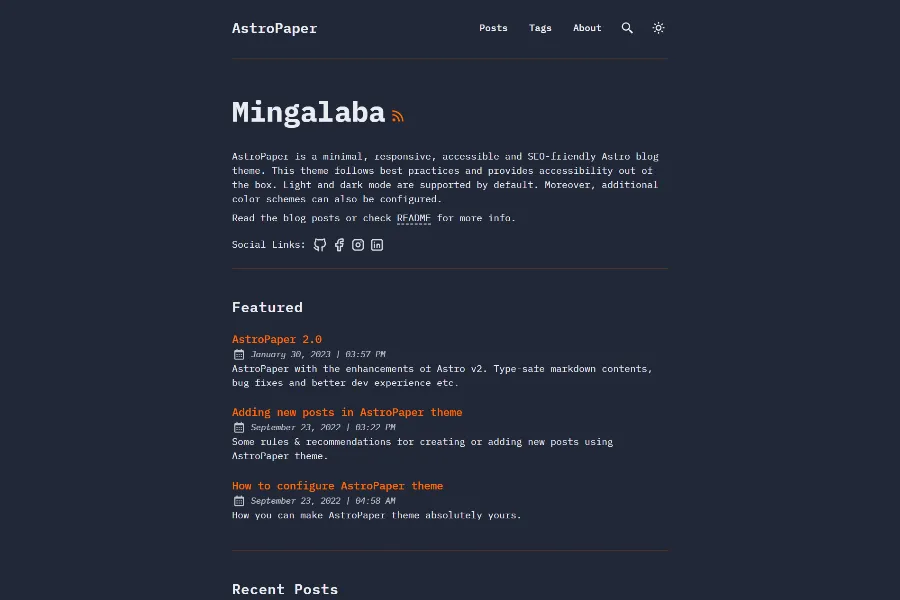
Best for: Developers who want a minimal, accessible blog they can tweak deeply without fighting the theme.
AstroPaper is one of the most widely used Astro blog themes in the community. It is open source, actively maintained, and built with accessibility as a genuine priority rather than a checkbox. The GitHub star count reflects real adoption, not just a launch bump.
What we like: Type-safe markdown, fuzzy search, dynamic OG image generation, and a solid dark/light mode implementation. It follows Astro best practices closely, so upgrading Astro versions tends to go smoothly.
Worth knowing: The default design is intentionally minimal. If you want something that looks distinctive out of the box, you'll need to put in some CSS work. That's a feature for developers, less so for non-technical users.
Key features:
- Type-safe markdown
- Fast performance
- Accessible (keyboard and VoiceOver)
- Responsive across devices
- SEO friendly
- Light and dark mode
- Fuzzy search
- Draft posts and pagination
- Sitemap and RSS feed
- Dynamic OG image generation
- Highly customizable
Northendlab Light Astro

Best for: Personal blogs where simplicity and speed matter more than a large feature set.
Northendlab Light is a free Themefisher template focused on personal blogging. It strips things back to the essentials: clean layout, fast load times, and easy content editing in Markdown or MDX.
What we like: Nine pre-designed pages is enough to get a personal blog live without any extra setup. FuseJS search, taxonomy, and MDX auto-import are included, which is more than you'd expect from a minimal free theme.
Worth knowing: Another free Themefisher product. It covers less ground than Bookworm Light in terms of use cases, but if you specifically want a personal blog rather than a publication-style site, the focused scope is actually useful.
Key features:
- 9+ pre-designed pages
- Highly customizable
- Search functionality with FuseJS
- Built with Tailwind CSS
- Fully responsive
- SEO friendly
- Taxonomy support
- 95+ Google PageSpeed Score
- Netlify pre-configured
- Contact form support
- Markdown and MDX support
- MDX components auto import
- Free updates
Astroplate
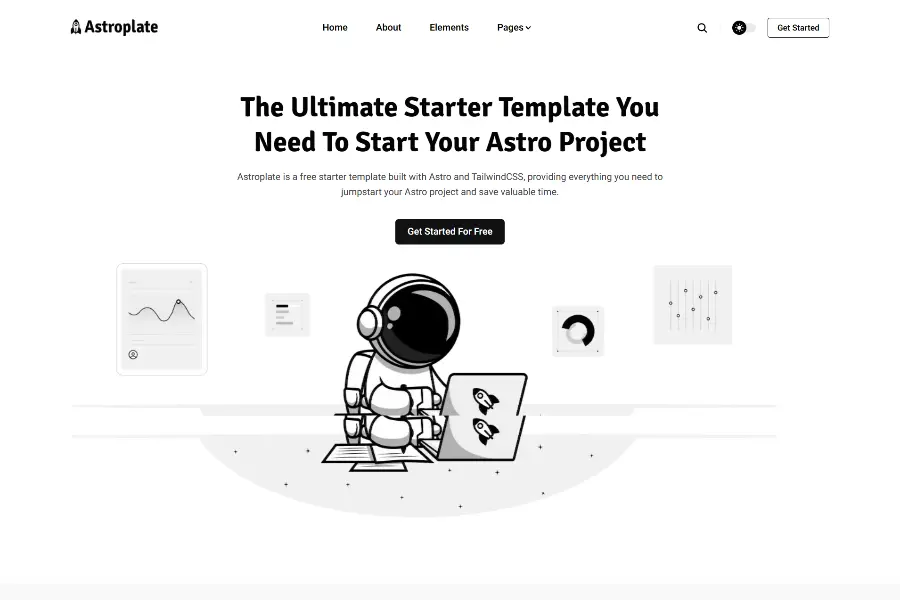
Best for: Developers starting a new Astro project who want a solid foundation rather than a finished design.
Astroplate is a free starter template from Zeon Studio (part of the same team as Themefisher). It is built with Astro, TailwindCSS, and TypeScript. Rather than being opinionated about design, it focuses on wiring up the features most Astro blogs need, so you spend less time on boilerplate.
What we like: Multi-author support, dark mode, Disqus comments, syntax highlighting, and similar post suggestions are all pre-wired. TypeScript support is a genuine advantage if you want type safety across your content layer.
Worth knowing: This is a starter template, not a polished theme. You will need to invest time in the visual design. It is also a Zeon Studio product, so the same disclosure applies as with other templates from this team.
Key features:
- Multi-author support
- Similar posts suggestion
- Search functionality
- Dark mode
- Tags and categories
- Netlify pre-configured
- Contact form support
- Fully responsive
- Markdown and MDX support
- Disqus comments
- Syntax highlighting
Dante
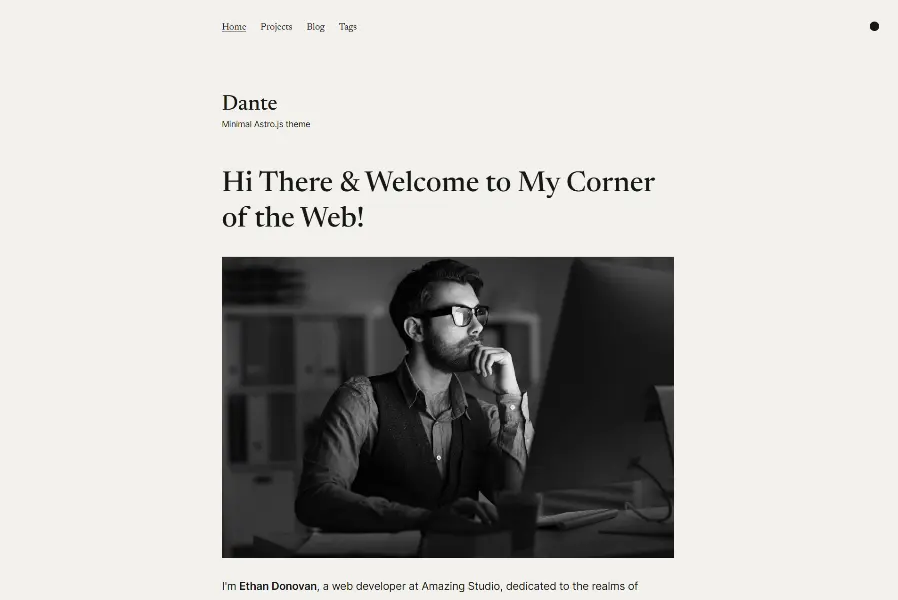
Best for: Individuals who want a blog and portfolio combined in one minimal theme.
Dante is a community-built Astro theme that pairs a blog with a portfolio section, making it a practical choice for designers, writers, or developers who want one site to cover both. It is built on Astro.js and Tailwind CSS and supports both dark and light modes.
What we like: The portfolio collection alongside the blog is genuinely useful. View transitions, pagination, and post tags are included. RSS and sitemap support are solid. The overall design is restrained in a way that holds up well across content types.
Worth knowing: Dante is not from Themefisher. It is a community project. Development activity and long-term support depend on the maintainer. Check the GitHub repository for recent commit activity before committing to it.
Key features:
- Dark and light color mode
- Hero section with bio
- Portfolio collection
- Pagination support
- Post tags support
- Subscription form
- View transitions
- Tailwind CSS
- Mobile-first responsive layout
- SEO friendly with canonical URLs and OpenGraph data
- Sitemap support
- RSS feed support
- Markdown and MDX support
AstroWind
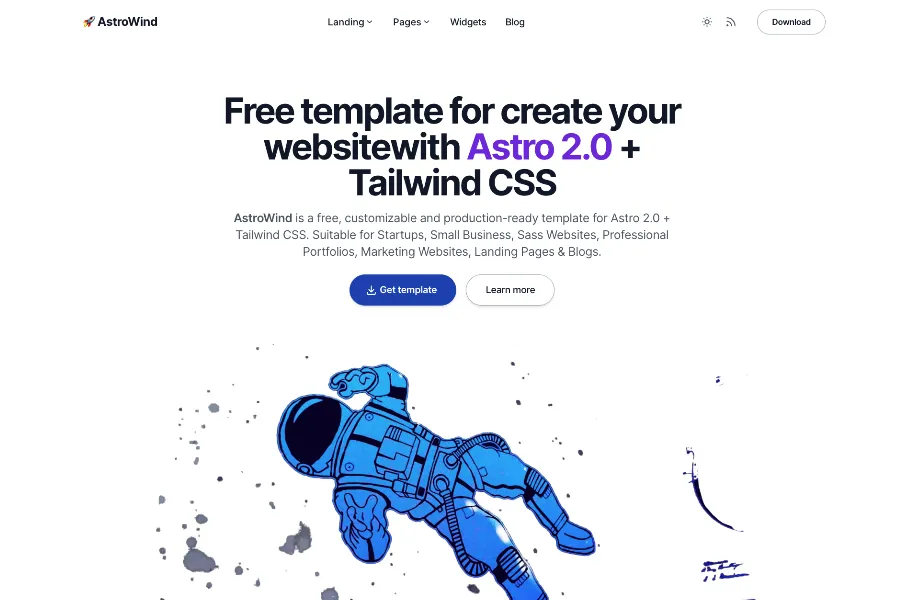
Best for: Marketing or business sites that also need a blog, rather than pure blog-first projects.
AstroWind is a free open-source template built with Astro 4.0 and Tailwind CSS. It is broader in scope than a pure blog theme, covering landing pages, service pages, and blog content in one package. The blog functionality is solid and the production PageSpeed scores are consistently high.
What we like: Image optimization via Astro Assets, automatic RSS, MDX support, categories and tags, and built-in analytics integrations (Google Analytics and Splitbee). RTL support is included, which is rare among free Astro themes.
Worth knowing: The broader scope means more complexity. If you just want a blog, AstroWind brings a lot of extra structure you may not need. For a marketing site with a blog attached, it is a strong pick. For a focused writing blog, something like AstroPaper or Dante is less to manage.
Key features:
- Production-ready PageSpeed scores
- Tailwind CSS with dark mode and RTL support
- SEO-friendly blog with automatic RSS, MDX, categories, tags, and social share
- Image optimization with Unpic
- Automatic sitemap generation
- Open Graph tags
- Google Analytics and Splitbee integration
Openblog
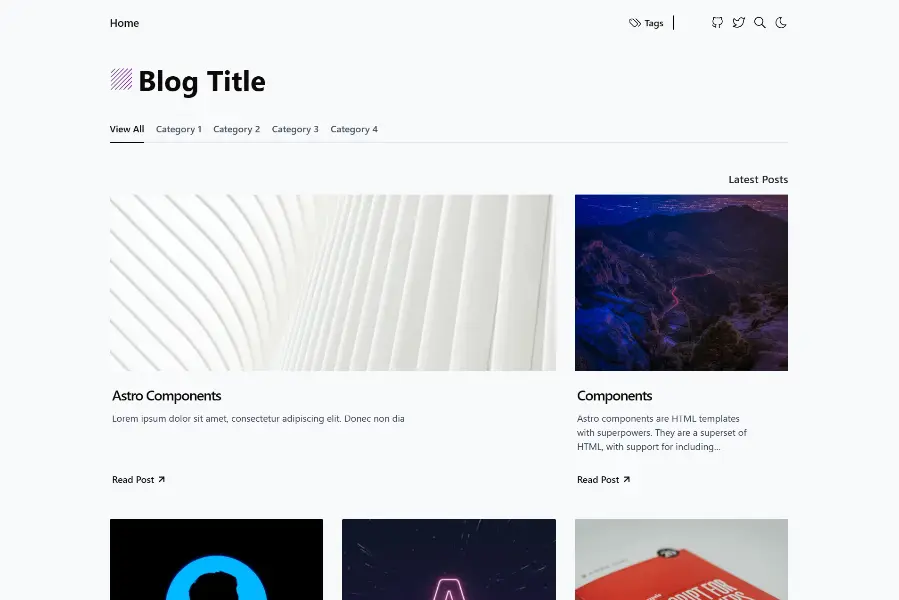
Best for: Writers who want a 100/100 Lighthouse score and accessibility built in from the start.
Openblog is a community-built Astro blog template with a strong focus on performance and accessibility. It covers the core features a writing-focused blog needs without adding visual complexity.
What we like: 100/100 Lighthouse performance, RSS and sitemap support, table of contents, image optimization, and dark mode are all included. The codebase is clean and readable if you need to extend it.
Worth knowing: Not from Themefisher. Maintenance depends on the community contributor. The design is minimal to the point of being plain. If visual distinctiveness matters to you, expect to put in CSS work.
Key features:
- Minimal styling
- Mobile responsive
- 100/100 Lighthouse performance
- SEO friendly with canonical URLs and OpenGraph data
- Sitemap support
- RSS feed support
- Markdown and MDX support
- Syntax highlighting
- Image optimization
- Table of contents
- Dark mode
Super Solstice
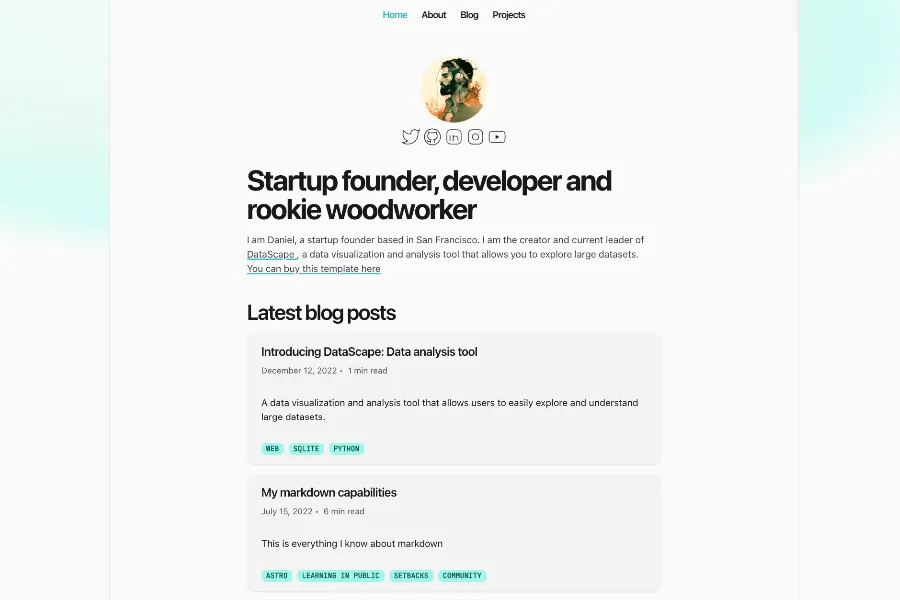
Best for: Software engineers, designers, or founders who want a combined portfolio and blog.
Super Solstice is a personal website template with a contemporary design. It covers the pages most professionals need: home, about, projects, and blog. The blog is powered by Markdown and sorted by tags.
What we like: PageSpeed scores of 100 for Performance and SEO, and 97 for Accessibility are strong. Light and dark mode using CSS variables makes theming straightforward. It uses Tailwind CSS and minimal vanilla JS.
Worth knowing: Not from Themefisher. Community-maintained. Feature set is lean compared to some entries on this list, which suits people who want simplicity over configuration options.
Key features:
- Sleek and modern design
- Contact form
- About, projects, blog, and home pages
- Blog powered by Markdown, sorted by tags
- 100 Performance, 97 Accessibility, 100 Best Practices, 100 SEO on PageSpeed Insights
- Light and dark mode with CSS variables
- Responsive design
- Tailwind CSS and vanilla JS
Astrofy
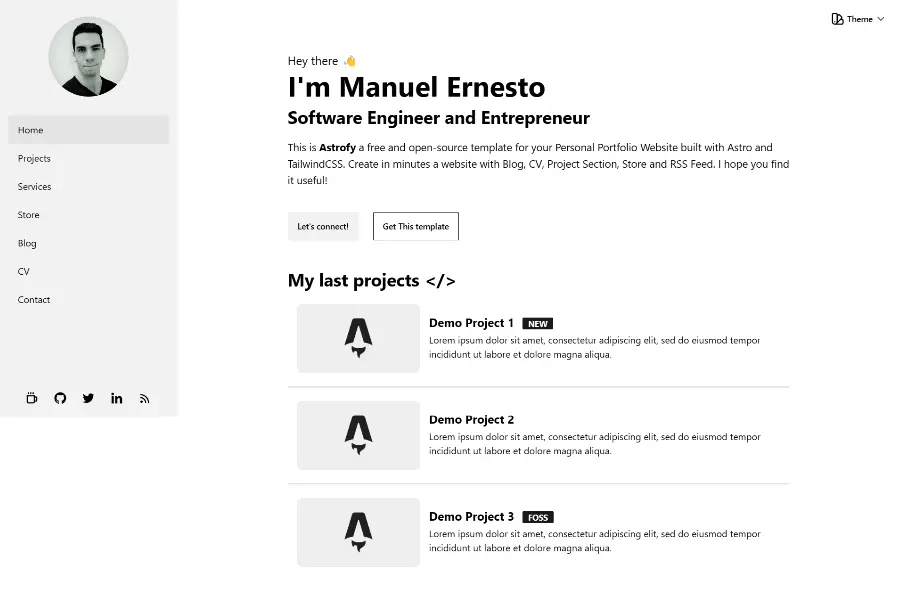
Best for: Personal portfolio sites with an attached blog section.
Astrofy is a free open-source template for personal portfolio websites. It is built with Astro and TailwindCSS, and the blog functionality is part of a broader personal site structure.
What we like: It is lightweight, fast to set up, and easy to customize if you are comfortable with CSS. Good starting point for developers who want a personal site up quickly.
Worth knowing: The blog component is secondary to the portfolio focus. If your primary goal is a content-heavy blog, templates like AstroPaper or Bookworm Light are better fits. Maintenance is community-driven, so check recent activity on the GitHub repo.
More Info DemoBrutal
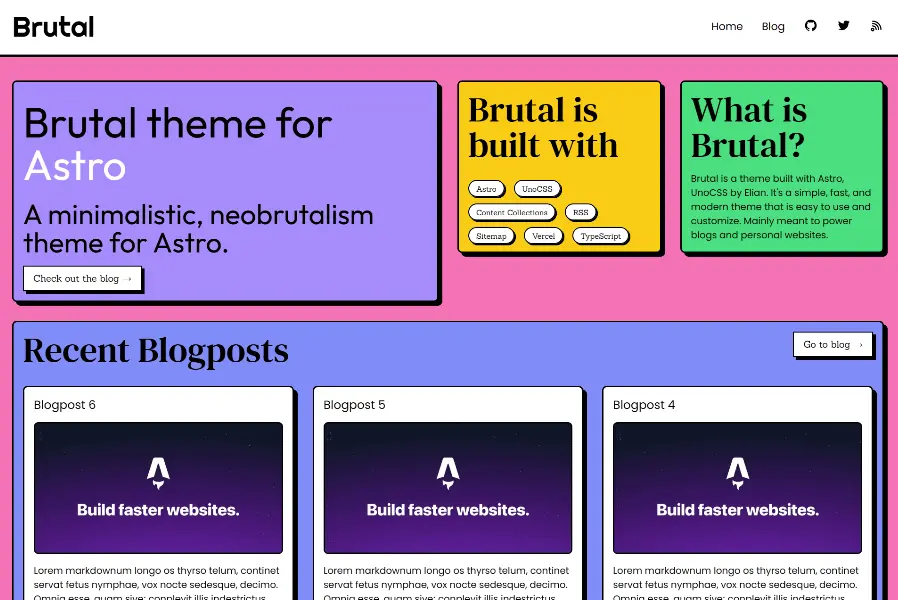
Best for: Anyone who wants something that looks genuinely different from the standard minimal Astro theme.
Brutal is a neobrutalist Astro theme. Neobrutalist design uses bold borders, flat colors, and raw layouts as a deliberate aesthetic choice. It is not for every context, but if you want your blog to stand out, Brutal does that.
What we like: Image optimization, RSS, and sitemap are included. The design has real personality, which is rare in free blog themes. Good SEO foundation despite the unconventional aesthetic.
Worth knowing: Not from Themefisher. The neobrutalist style is a strong design choice. It works well for creative, technical, or opinionated personal blogs, but may feel out of place for professional service sites or corporate content.
More Info DemoMilkyway
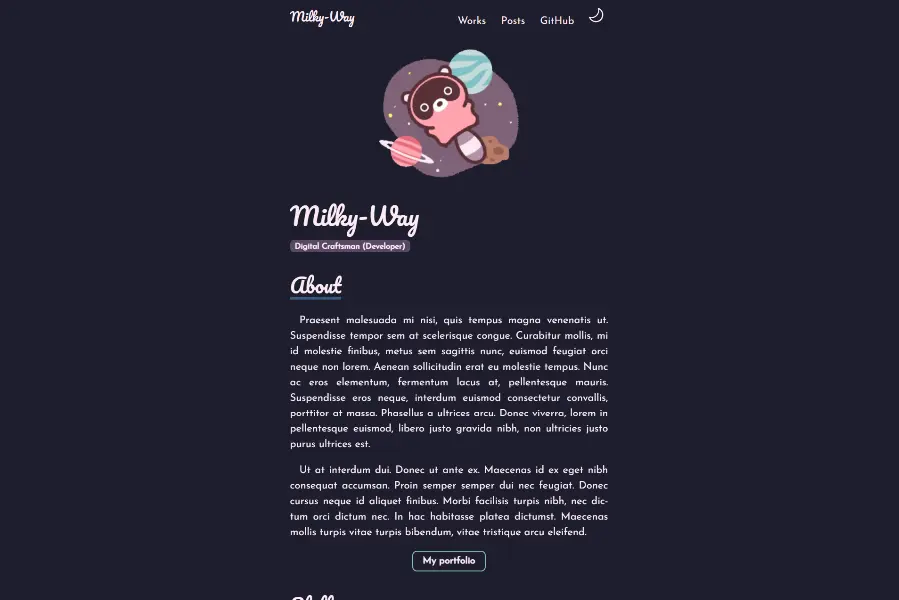
Best for: Creative portfolio sites that want a light, whimsical aesthetic.
Milkyway is a minimalist portfolio template with a distinctive soft, creative feel. It is fast, clean, and easy to customize at the CSS level.
What we like: Simple and efficient. Good starting point if you want a portfolio-adjacent site with a gentle visual style.
Worth knowing: Feature set is thin compared to most other templates on this list. No built-in search, no RSS, no taxonomy. More of a starting point than a complete blog system. Check the GitHub repo for current maintenance status before using it in a long-term project.
Key features:
- Simple and clean design
- Responsive layout
- Fast, built with Astro
- Easy to customize with CSS
How to choose
Here is a quick decision guide based on use case:
- Content-heavy blog, multiple authors: Bookworm Light Astro
- Premium design, full support: Logbook Astro
- Developer-first, maximum control: AstroPaper or Astroplate
- Portfolio plus blog: Dante, Super Solstice, or Astrofy
- Marketing site with blog attached: AstroWind
- Distinctive, unconventional aesthetic: Brutal
- Personal blog, minimal setup: Northendlab Light Astro
Explore more free and premium Astro themes