
Bookworm Light Nextjs
- Highly Customizable
- MIT License
- Community Support
- FREE Updates
Bookworm Light Nextjs
Free- MIT license
- Documentation
Bookworm Light Nextjs
$17.00- Commercial License
- Premium Support
- Free Update
- Documentation
- No Copyright
- Removable License
Theme Description
Upgraded to Next.js 16 with built-in Agent skills 🚀
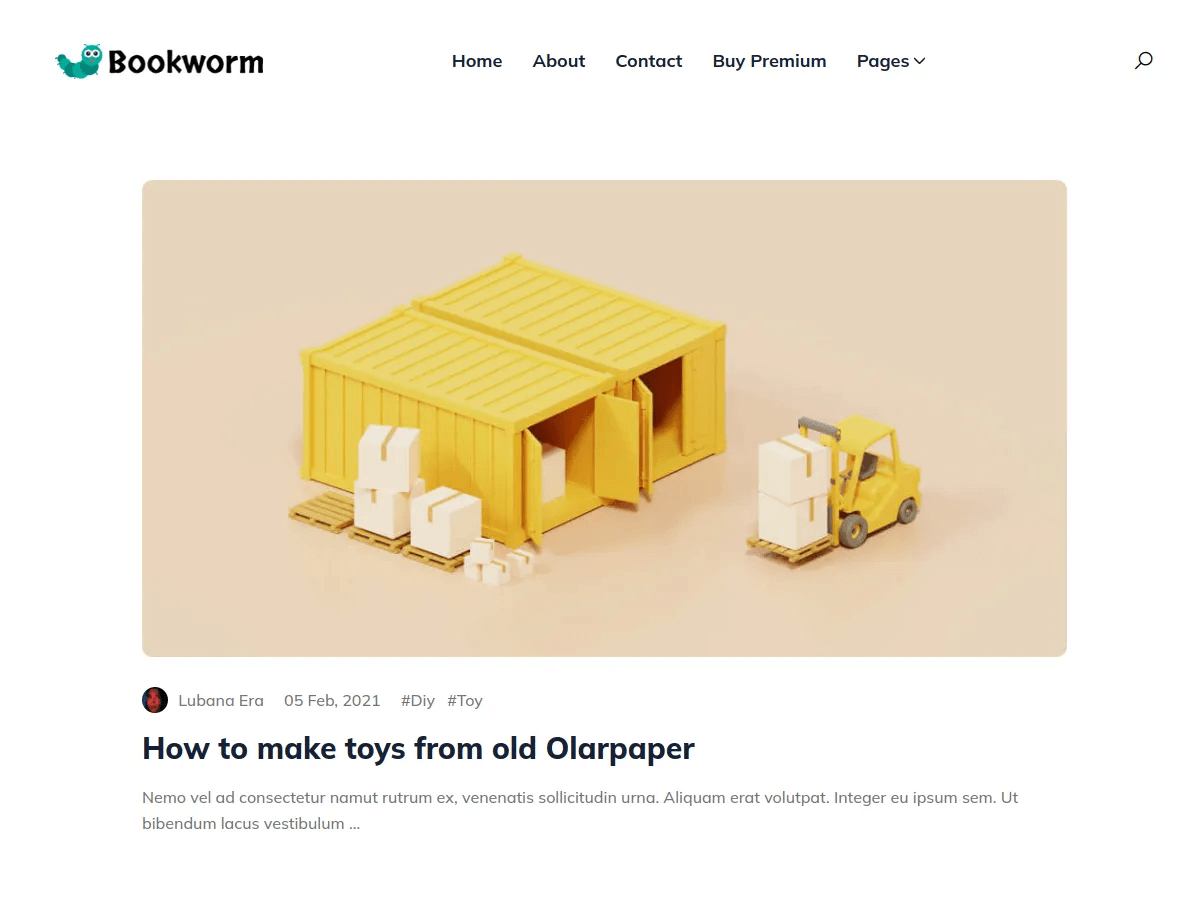
Bookworm Light is a minimal, free multi-author NextJS blog theme built for content creators and bloggers across any niche, from food and travel to fitness, photography, and lifestyle. It comes with 13+ pre-designed pages, built-in search functionality, taxonomy support, and a 95+ Google PageSpeed score, all wrapped in a highly customizable, readability-first design.
Pages Included
- Homepage
- About
- Blog
- Blog Single
- Author
- Author Single
- Categories
- Tags
- Search
- Contact
- 404
Key Features
- Multi-author support with individual author pages
- Built-in search functionality
- Taxonomy support (categories and tags)
- Post social sharing
- Related posts suggestions
- Contact form support
- Image optimized with Next/image
- MDX components auto-import
- Highly customizable (color, font, menu, social links, SEO meta tags, etc.)
Common Features
All of our NextJS themes come with the following features:
- Clean code and folder structure
- Compatible with all modern browsers
- Free Icons + Google font
- Free future themes update
- Free customers support
- Responsive design
- Highly customizable
- Component-based design
- 90+ Google PageSpeed score
- Pre-configured Vercel & Netlify deploy setting
- Tailwind CSS for Styling
- SEO Optimized
- Pre-configured Sitepins CMS (Optional)
Who Is This Template For
Bookworm Light is perfect for bloggers, content creators, and small publications who want a fast, clean, and free blog theme without any compromise on features. It works beautifully for personal blogs, niche content sites, and multi-author publications covering topics like food, travel, fitness, photography, lifestyle, beauty, or health.
How to Get Started
- Download the code
- Run
npm installto install dependencies - Run
npm run devto start the local development server - Update
src/configwith your site name, description, and style - Replace placeholder content and assets with your product content
- Run
npm run buildand deploy to your preferred platform